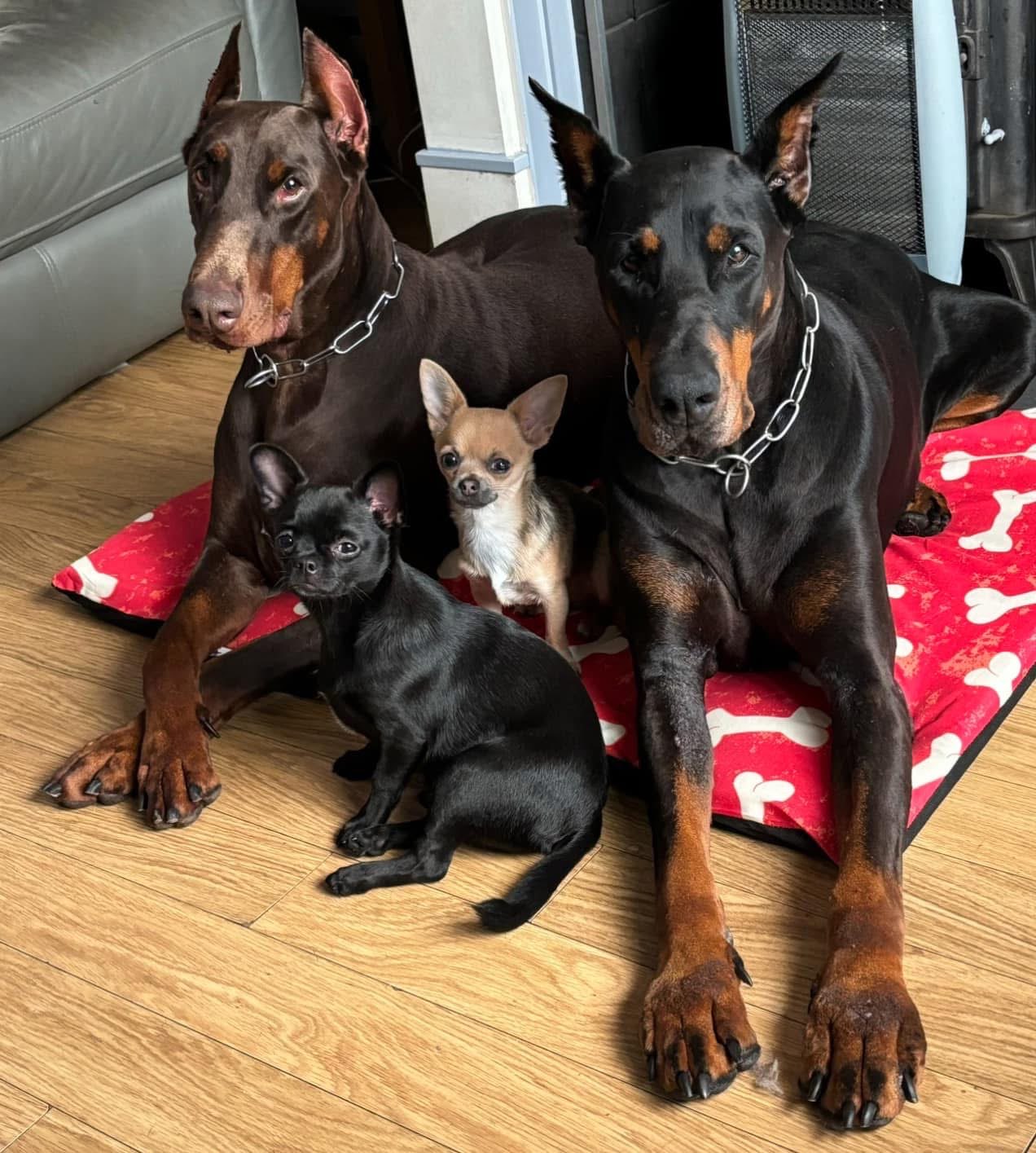
Forged in function.
Dobermann blended Rottweiler, German Pinscher, Greyhound, Weimaraner, and black-and-tan terrier blood to produce a dog that could think, work, and defend in equal measure. It is one of the few breeds named for its creator — and the only one designed expressly to protect a man.
A century later, the Doberman remains what he made it: a working breed first, a companion second, and never an ornament.
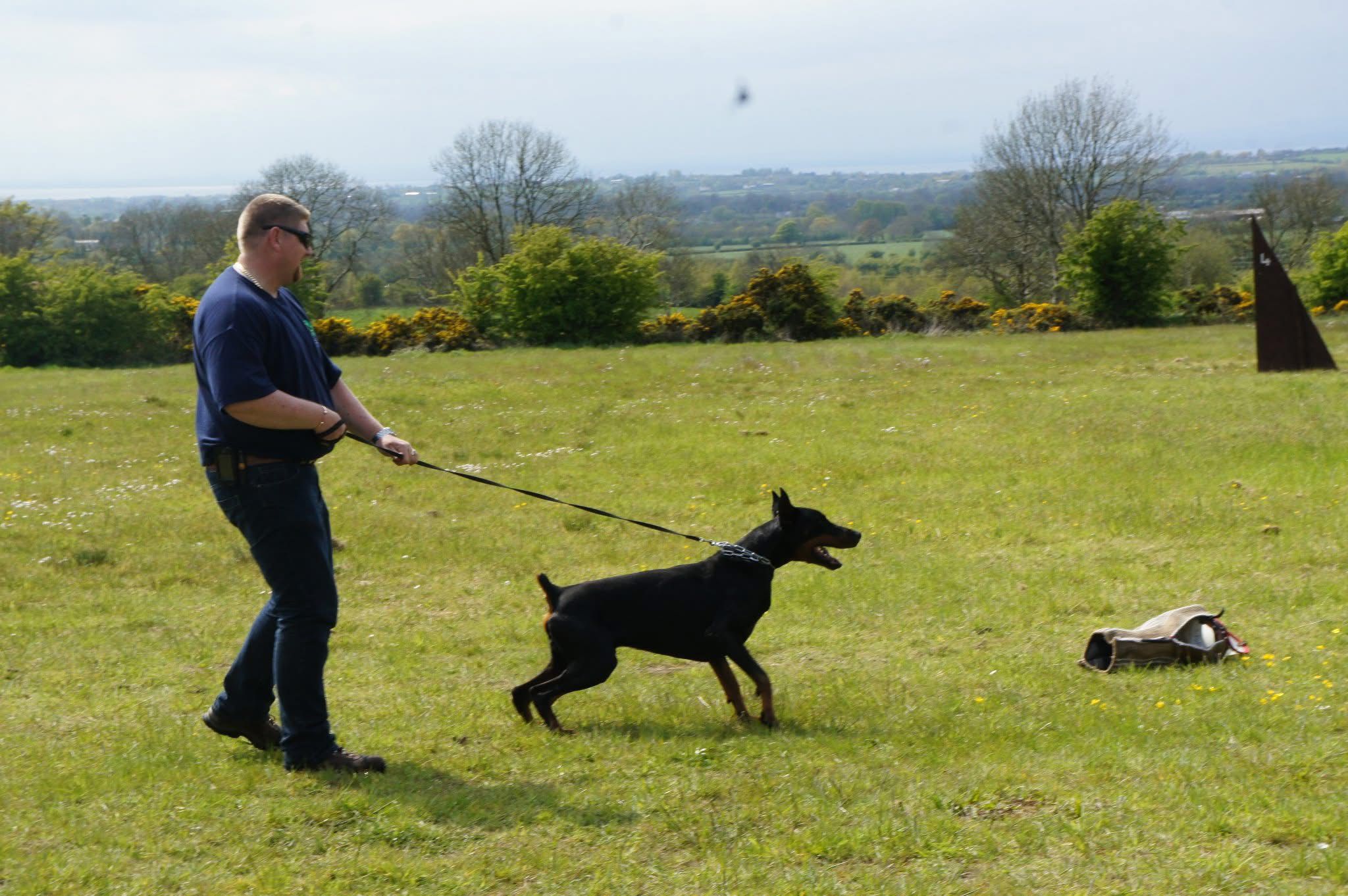
Loyal to one, watchful of all.
The classic Doberman bonds intensely with its handler. It is naturally discriminating — friendly with people its handler approves of, suspicious of those it does not. This is not aggression. It is judgment.
A well-bred, well-raised Doberman is calm in the home, attentive on the street, and decisive when something is wrong. They read their environment continuously. They miss very little.
- Intelligent. Ranked among the top five working breeds for trainability.
- Bonded. Famous for "velcro" attachment to their person.
- Discerning. Reads people and situations, not just commands.
- Athletic. Built to run, jump, and work for hours.

Not a dog for everyone.
A Doberman is not a low-maintenance pet. They require consistent training, significant exercise, and — most importantly — a handler willing to lead. Without structure, their intelligence becomes a problem. With it, they are one of the most rewarding breeds on earth.
They thrive on partnership, not solitude. A Doberman left to its own devices tends to invent jobs for itself, and the jobs it picks rarely match what its people had in mind.
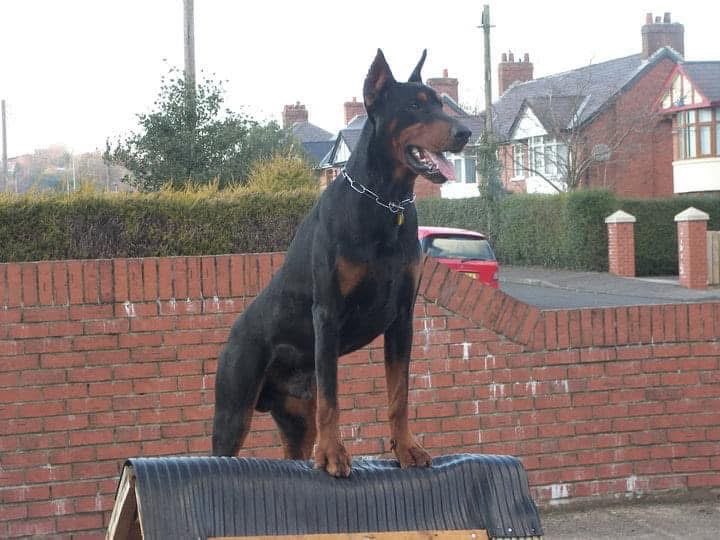
Family dog. Real one.
Properly raised, the Doberman is one of the great family dogs — gentle with children of the household, tolerant of guests, and quietly observant all the while. They want to be where their people are. Always.
They are not outdoor dogs, kennel dogs, or yard dogs. A Doberman left alone becomes anxious. Inside, included, given a job — they thrive.